

Tarot has a reputation problem. Mention it in the wrong company and people picture candlelit rooms and dramatic proclamations about fate. The reality of how most people use tarot, particularly when facing genuinely difficult decisions, is far more grounded than that.
At its core, tarot works as a reflective tool. The cards don't make decisions for you. They surface things you may already sense but haven't fully articulated.
What Tarot Actually Does in a Decision-Making Context
When someone sits with a significant choice, the mind tends to loop. The same arguments replay, the same fears resurface, and rational analysis eventually hits a ceiling. Tarot interrupts that loop by introducing imagery and symbolism that bypasses the analytical mind and speaks more directly to intuition.
A spread laid out for a decision doesn't declare an outcome. It maps the energies present — what you're carrying into the situation, what obstacles exist, what you might not be seeing clearly. That's genuinely useful, regardless of your position on the metaphysical side of things.
The Structure Behind the Insight
One reason tarot works well for big decisions is that traditional spreads are structurally designed for complexity. A three-card spread covering past, present, and future gives context. A Celtic Cross spread goes deeper — examining underlying influences, external factors, hopes, fears, and likely outcomes if the current path continues.
Melbourne psychic readings that incorporate tarot often use these spreads to open conversations that clients hadn't known how to start. Sometimes the most valuable moment in a reading is recognising which card made your stomach drop — and asking why.
Tarot Doesn't Remove Your Agency
This is worth saying plainly: tarot doesn't tell you what to do. Any reader worth their salt will make this clear. The cards reflect possibility and energy, not fixed outcomes. Free will remains entirely yours.
What shifts after a good reading is the quality of your thinking. People often describe feeling less foggy, more anchored in what they actually want rather than what they feel they should want. The best psychics clients return to aren't those who make bold predictions — they're the ones who help people hear themselves more clearly.
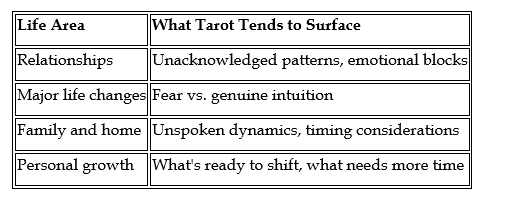
Common Decision Types Tarot Addresses Well
Accessibility Has Changed the Experience
Not everyone can easily get to an in-person session, and that's fine. The Phone psychic readings Melbourne practitioners offer has grown considerably, and many people find the format surprisingly effective. Without the visual dimension of sitting across from someone, people often find it easier to stay inward and focused on their own responses.
The Best psychics in Melbourne tend to agree that the most productive sessions happen when clients arrive with genuine questions rather than a need for reassurance.
Tarot won't make your decision. But it might finally let you make it yourself.
Author Bio
The author is a psychic reader who offers honest, heart-centred guidance to those seeking clarity, healing, or emotional release. With years of experience supporting clients through life’s uncertainties, her approach is grounded, compassionate, and practical. Visit https://www.roosyspirit.com/ to explore more.
Write a comment ...